


Many employees in Memphis and across Tennessee work well beyond 40 hours a week without seeing overtime pay. They are told they are “salaried,” “management,” or “exempt,” and they accept it because it sounds official. In reality, employee misclassification is one of the most common wage violations in Tennessee and one of the most misunderstood.
Being labeled exempt does not automatically make it true. Federal law sets strict rules for who qualifies for overtime and who does not, and many employers apply those rules incorrectly or too aggressively.
“Employee classification is one of the most frequent compliance failures we see. Titles and salaries do not control. The law looks at what employees actually do, how they are paid, and whether the employer follows wage rules consistently.” – Alan Crone, Founder of The Crone Law Firm.
If you work long hours and are unsure whether you should be receiving overtime, this guide will help you understand how classification really works and what steps you can take to protect yourself. Keep reading to learn how the law applies to your job, not just your job title.
What “Exempt” and “Nonexempt” Really Mean Under the FLSA
The terms exempt and nonexempt come from the Fair Labor Standards Act (FLSA), the federal law that governs minimum wage, overtime pay, and hours worked. The FLSA was enacted to prevent employers from overworking employees without fair compensation, and it still applies to most workers in Tennessee today.
A nonexempt employee is entitled to overtime pay typically time and a half for every hour worked beyond 40 in a single workweek. A nonexempt employee must be paid overtime, regardless of whether they are paid hourly or on a salary basis.
An exempt employee, on the other hand, is excluded from overtime protections. Employers are not required to pay overtime to exempt employees but only if the exemption is legally valid.
This distinction is critical because employers often misapply exemptions. The law does not allow employers to opt out of overtime simply because it is inconvenient or expensive. The exemption must meet specific legal criteria, and the burden is on the employer to prove it applies.
To understand the legal foundation for these rules, the U.S. Department of Labor provides authoritative guidance on the Fair Labor Standards Act and overtime exemptions, which courts regularly rely on when resolving misclassification disputes.
Who the FLSA Protects in Tennessee and Why It Matters
Unlike some states, Tennessee does not have its own wage and hour statute that replaces federal law. That means most overtime disputes in Memphis and throughout the state are governed directly by the FLSA.
Nonexempt employees and overtime protections
If you are classified as nonexempt, the law is clear: you must receive overtime pay for hours worked over 40 in a workweek. When employers fail to do so, employees may be entitled to recover unpaid wages going back several years, plus additional damages and attorneys’ fees.
Nonexempt employees are often hourly workers, but many salaried employees also fall into this category. The assumption that only hourly workers receive overtime is one of the most damaging myths in employment law.
Employees who are denied overtime frequently seek help through an overtime pay claim, especially when unpaid hours accumulate over months or years.
Exempt employees and limited protections
Exempt employees are not entitled to overtime, but exemption is narrowly defined. The law does not care about company hierarchy, loyalty, or job titles. It focuses on objective criteria.
When employers stretch exemption rules, misclassification often overlaps with other workplace violations, including retaliation for questioning pay practices or wrongful termination after raising concerns.
This is why classification matters so much: it directly affects how much you are paid, how many hours you can be required to work, and what remedies are available if your rights are violated.
Salary Alone Does Not Decide Exempt Status
One of the most common things we hear from employees is: “I’m on salary, so I don’t get overtime.” That statement is often wrong.
The salary test explained
To qualify as exempt, most employees must be paid at least a minimum weekly salary set by federal regulation, and that salary must be paid on a true salary basis. This means your pay generally cannot be reduced because of the quantity or quality of your work.
However, meeting the salary threshold alone is not enough. Salary is only one part of the analysis.
The duties test is just as important
Even if you are paid a qualifying salary, your actual job duties must fall within one of the limited exemption categories recognized by the Department of Labor.
Common exemption categories include:
- Executive employees
- Administrative employees
- Professional employees
- Certain outside sales employees
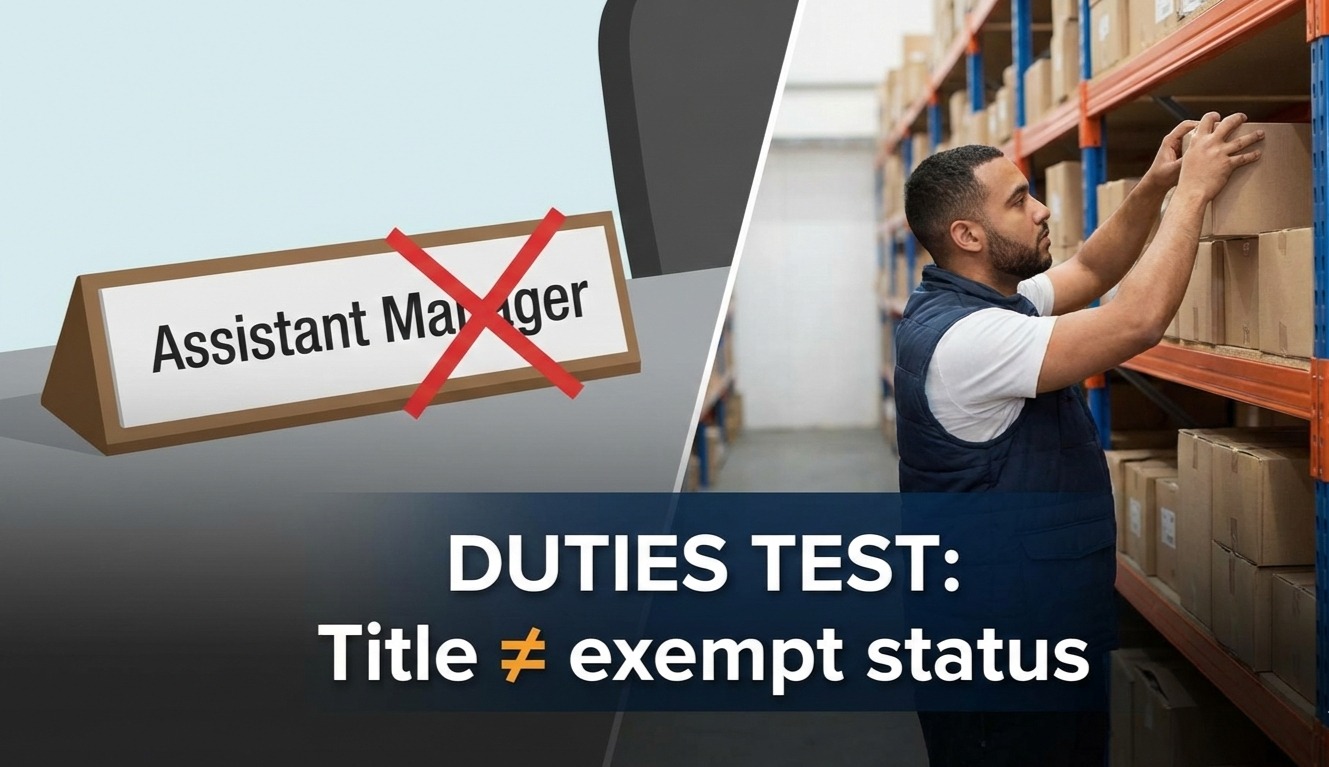
What matters is what you actually do day to day, not what your offer letter says, not your job title, and not how your employer describes your role to clients.
Many employees in Memphis are called “managers” but spend most of their time performing the same tasks as hourly workers. Others are labeled “administrative” while following rigid procedures with little discretion. In these cases, the exemption often fails.
When salaried employees do not meet the duties test, they remain entitled to overtime. These disputes are frequently handled under wage and hour law, especially when employers rely on titles rather than reality.

Industries Where Exempt Misclassification Commonly Occurs
While employee misclassification can happen in almost any workplace, certain industries in Memphis and across Tennessee see it far more often. These sectors tend to rely on long hours, lean staffing, and broad job descriptions that blur the line between exempt and nonexempt work.
Management roles with limited authority
Retail, hospitality, and service-based businesses frequently classify employees as managers even when they lack meaningful authority. Employees may open or close locations, train new hires, or handle scheduling, yet still spend most of their time performing the same frontline work as hourly staff. When management duties are secondary rather than primary, exemption often does not apply.
Administrative roles with rigid procedures
Administrative exemptions are commonly misused in office environments, healthcare support roles, and logistics operations. Employees may handle paperwork, data entry, or coordination tasks but have little discretion or independent judgment. Following established policies or checklists, without authority to make significant decisions, generally fails the exemption test.
Professional titles without professional discretion
Employers sometimes label roles as “professional” to justify exempt status, even when the work does not require advanced education or specialized intellectual judgment. Courts focus on whether the role truly involves professional-level analysis or expertise, not whether the title sounds technical or specialized.
Technology and operations roles with heavy workloads
In fast-paced industries such as warehousing, manufacturing, and IT support, employees are often paid a salary and expected to work extended hours. If the role is primarily operational or task-driven rather than strategic or decision-based, the exemption may be improper.
Understanding how exemption rules are applied across industries helps employees recognize warning signs earlier. If your job title or pay structure does not reflect how your work actually functions day to day, it may be worth taking a closer look at whether the classification is legally sound.
How Employers Commonly Misclassify Workers
Misclassification rarely happens by accident. In many workplaces, it becomes normalized over time.
Job titles used as shields
Employers often rely on impressive-sounding titles to justify exemptions. Titles like “assistant manager,” “team lead,” or “coordinator” are frequently used even when the employee has little authority or independent decision-making power.
Courts look past titles and examine substance. If your primary duty is production work, customer service, or manual labor, exemption may not apply even if you supervise others occasionally.
Salary as a cost-control tool
Some employers convert hourly employees to salaried roles to reduce overtime costs without changing job duties. This practice is especially common in industries that demand long hours, such as logistics, healthcare support, retail management, and hospitality.
These situations often overlap with retaliation claims, particularly when employees question their classification and experience reduced hours, discipline, or termination afterward.
Why Tennessee employees are especially vulnerable
Because Tennessee follows federal law without additional state-level protections, employers sometimes assume they have more flexibility. In reality, federal courts strictly enforce FLSA standards.
When misclassification is combined with termination or discipline, employees may also have claims related to wrongful termination, especially if the employer’s actions followed wage complaints.
What to Do If You Believe You Are Misclassified
Recognizing misclassification is only the first step. How you respond can make a significant difference.
Document your work and pay practices
Start by keeping records of:
- Hours worked each week
- Job duties performed
- Pay stubs and salary changes
- Emails or instructions related to scheduling and workload
This documentation becomes critical if a dispute arises.
Avoid self-diagnosing your legal status
While online research is helpful, exemption analysis is fact-specific. Small details such as how much discretion you have or how often you perform certain duties can change the outcome.
Speaking with an employment lawyer allows you to evaluate whether your classification is lawful and whether unpaid overtime may be recoverable.
In some cases, misclassification claims arise alongside disputes involving employment law violations more broadly, including discrimination or contract disputes.
Understand your protections against retaliation
Federal law prohibits employers from retaliating against employees who raise good-faith concerns about overtime or wage violations. If retaliation occurs, it may create additional legal claims beyond unpaid wages.

Why Misclassification Is a Serious Issue
At Crone Law Firm, we view employee misclassification as more than a technical payroll error. It is a systemic issue that shifts the cost of doing business onto workers and their families.
Overtime laws exist to protect health, safety, and economic stability. When employees are forced to work excessive hours without proper pay, burnout increases, turnover rises, and workplace culture suffers.
Holding employers accountable is not about punishing success, it is about enforcing fairness and ensuring the rules apply equally across industries in Memphis and throughout Tennessee.
Frequently Asked Questions About Exempt and Nonexempt Employees
How can I tell if my duties qualify me as exempt?
Your duties must primarily involve executive, administrative, or professional work as defined by federal law. Occasional supervision or paperwork is usually not enough.
Can a salaried employee still receive overtime?
Yes. Many salaried employees are nonexempt and must be paid overtime when they work more than 40 hours in a week.
What if my employer says everyone in my role is exempt?
That does not control the analysis. Courts examine what you actually do, not how a company labels a position.
Is misclassification illegal in Tennessee?
Yes. Because Tennessee relies on federal wage law, misclassification that violates the FLSA is unlawful and may result in back pay and damages.
Can I be fired for asking about overtime pay?
The law prohibits retaliation for raising wage concerns. Termination or discipline after such complaints may give rise to additional claims.
Take the Next Step Toward Protecting Your Pay
Misclassification can go unnoticed for months or even years, resulting in significant unpaid overtime and lost compensation. If you have questions about whether your pay structure complies with federal wage law, contact Crone Law Firm to have your job duties, hours worked, and compensation reviewed by an experienced Tennessee employment attorney who understands wage and hour issues affecting workers across the state.
About the Author
Alan Crone is the founder of the Crone Law Firm. With decades of experience in employment law, his mission is to help clients navigate complex legal issues while safeguarding their rights and businesses. Connect with him on LinkedIn to learn more about his expertise and leadership in the field.