

Has your employer recently told you that you need to return a commission you already earned? Unfortunately, you are not alone.
Many Tennessee workers find themselves in this exact moment of uncertainty, wondering whether the company is allowed to demand repayment, whether the commission was actually theirs, and what they are supposed to do next.
“When your commission is questioned or withheld, the situation can feel overwhelming. You deserve clear information and support that will stand beside you and protect your rights.” – Alan Crone, founder of The Crone Law Firm.
Before you respond or sign anything, take a moment to pause. Contact our team and we will help you understand your options. You can also explore the information below to see when employers can request commission repayment, when they cannot, and what you can do to protect your income.
How Tennessee Decides When a Commission Is Earned
When a company asks for money back, everything comes down to one question: when was the commission actually earned? Tennessee law focuses on a few key elements to answer that.
Your Written Compensation Plan
Most commission systems specify when a commission becomes payable. This might be:
- when the sale closes
- when the customer signs a contract
- when payment is collected
- after a waiting or cancellation period
- after a product or service is delivered
- once the employee remains employed through a payout date
These milestones matter because they determine when the right to the commission becomes complete. If your plan says you earn commission at closing and the closing occurred, the company usually cannot take that money back simply because something happened later.
Your Employer’s Past Practices
Companies do not always follow their written rules. Some pay commissions at closing even if the written policy is unclear. Others apply clawbacks selectively depending on the situation. Tennessee courts pay attention to how a company has historically handled commissions because those real world patterns often reflect the expectations the employer created.
Tennessee Wage Regulation Act
Tennessee law protects earned wages. Once a commission is earned under the rules in place at the time, an employer cannot create new rules later or reinterpret old ones to take back money. Many disputes come from companies trying to adjust policies after the fact or treating commissions like conditional bonuses instead of earned pay.
Understanding these foundations helps you see whether your employer’s request has any legal basis.

When Employers May Ask for Commission Back
Although many repayment demands turn out to be improper, there are a few situations where an employer may legitimately request repayment.
A Genuine Payroll or Accounting Error
Sometimes, payroll makes an honest mistake. A duplicate payment might go out, or a number may be entered incorrectly. In these cases, employers are allowed to request repayment, but you have rights. You can ask for written documentation, set a reasonable repayment schedule, and decline any automatic paycheck deductions without your consent.
However, you do not have to correct the error on the employer’s timeline. In fact, you can discuss a repayment method that does not create financial strain.
Clear Clawback Rules in a Written Plan
Some industries use commission structures with cancellation based adjustments or rules tied to customer payment. These rules are enforceable only when they are clearly written, consistently applied, and communicated before the commission is earned.
Unclear wording or rules created after the fact do not qualify as enforceable clawbacks.
Industries With Standard Chargebacks
Industries such as insurance, telecom, SaaS, and certain retail finance sectors often rely on structured chargeback systems to adjust commissions based on customer cancellations, payment issues, or other conditions. These chargebacks can be legitimate, but only when the rules are clearly written, consistently applied, and communicated to employees before the commission is earned.
Because chargebacks involve taking back or adjusting wages, employers must follow strict federal standards. Employees who want authoritative guidance on how commission based pay is treated under federal law can review the U.S. Department of Labor’s official fact sheet on commission compensation.
When Employers Cannot Ask for Commission Back
Most of the repayment situations we see fall into this category. Companies often misunderstand the law or try to change rules after the fact.
The Commission Was Already Earned Under the Original Plan
If you reached the milestone that defines what “earned” means in your plan, the commission is yours. Customer cancellations, internal changes at the company, shifts in project scope, or new policies do not undo what has been earned.
The Rules Are Applied Unevenly
When an employer clawbacks commissions from some employees but not others, especially when the pattern looks inconsistent or unfair, it raises legal concerns. Sometimes those concerns fall under workplace discrimination concerns if the pattern lines up with protected characteristics such as age, gender, or race.
You Were Pressured Into Signing a Repayment Form
Some employers rely on urgency or intimidation to get employees to sign repayment documents. Agreements signed under pressure are not automatically enforceable. Employees can ask for time to review, request clarification, or speak with an attorney before signing anything.
Paycheck Deductions Without Permission
Under Tennessee law, employers cannot deduct money from your paycheck without your voluntary written consent. Many employees do not realize this until they see an unexpected deduction on a paystub. If this has happened to you, you can talk to our team about your wage and pay protections and what steps you can take next.
The Policy Was Not Provided or Explained
If you never received a written commission plan or a clear explanation of clawback rules, the company may not have the right to enforce repayment. Many disputes begin because the employer relied on unwritten rules or internal assumptions that were never actually communicated.
In some situations, asking questions about a deduction leads to discipline or termination. When that happens, our workplace retaliation attorneys can evaluate whether your rights were violated.
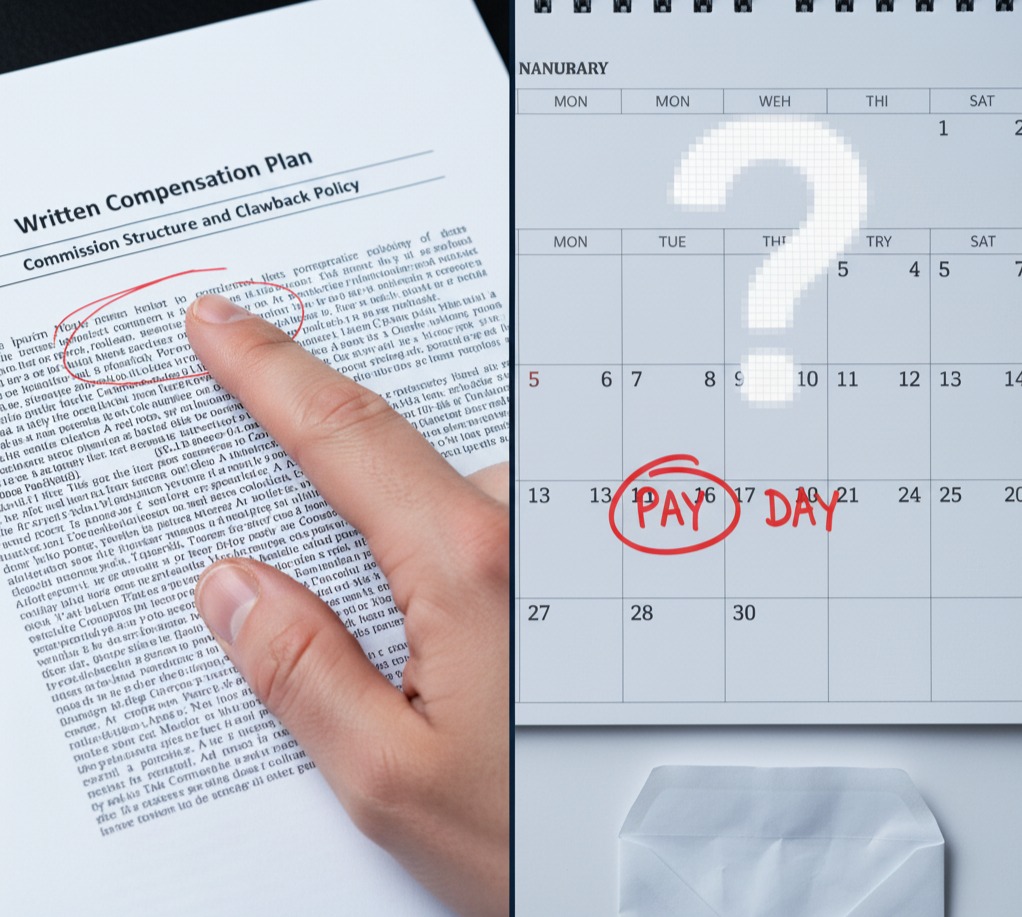
What You Should Do if Your Employer Asks for Commission Back
This is the moment when people often feel the most pressure, but you have more control than you may think.
Start by staying calm. You do not have to make a decision on the spot.
Ask for the request in writing so you can understand the employer’s position. Written communication prevents misunderstandings and makes it easier to review the details carefully.
Request a copy of your compensation plan so you can compare the employer’s claims to the actual wording.
Preserve all communications, including emails, text messages, and notes about conversations. Documentation becomes valuable if the situation escalates or if you experience retaliation.
You can also talk to an attorney who understands these issues. Having someone explain your wage and pay protections gives you a clearer picture of where you stand. Many employees discover they have more leverage than they expected because the employer failed to communicate rules or applied them inconsistently.
If the employer retaliated, reduced your hours, or terminated you after asking about your pay, our wrongful termination representation team can review whether your rights were violated. In some cases, employers try to offer a quick exit package after a wage dispute. You can ask us for severance agreement guidance before signing anything that affects your career or future income.
Tennessee Specific Realities That Affect Commission Disputes
Commission disputes in Tennessee often follow familiar patterns.
Tennessee wage law protects earned pay. Once the commission is earned, the employer cannot take it back because of internal business decisions.
At will employment does not give employers the right to reclaim earned wages. At will status only affects termination, not pay rights.
Commission heavy industries such as logistics, recruiting, real estate, insurance, and tech sales experience more disputes because their structures are more complex. Even in these industries, companies must follow Tennessee law.
Retaliation is a concern for many workers. Employees who question wage deductions sometimes face sudden discipline or negative treatment. If this has happened to you, it is important to get advice quickly.

Common Questions About Commission Repayment in Tennessee
Can an employer deduct commission from my paycheck?
Not without your written permission. Tennessee law requires voluntary, written authorization for any deduction related to commission disputes. Employers cannot reduce your paycheck on their own, even if they believe a commission was overpaid. You have the right to question the deduction and request full documentation before agreeing to anything.
Can the company sue me if I refuse to return a commission?
They can try, but they must prove the commission was not earned under your compensation plan. In many cases, the employer’s plan is unclear, inconsistently applied, or never properly communicated, which weakens their argument. Courts look at both the written policy and the employer’s real world practices, which often favor the employee.
Do I have to repay commission if a customer cancels?
Not unless your written plan clearly states that cancellations trigger clawbacks. If your agreement says the commission is earned at closing or at the time of sale, a later cancellation usually does not take away your right to that payment. Employers cannot invent new rules after the fact or rely on unwritten “internal policy” to reclaim your wages.
What if I already left the company?
An employer cannot change the rules after you have earned the commission. If the conditions for earning the commission were met while you were still employed, the employer generally cannot reclaim it after you leave, regardless of whether you resigned or were terminated. Any new rules introduced later are not enforceable.
Should I sign a repayment form?
Not before having someone review it. Repayment forms, acknowledgments, and “corrected payroll agreements” often include language that limits your rights or alters the terms of your compensation plan. Signing too quickly can harm your ability to challenge the repayment later. It is wise to have an attorney review the document so you understand exactly what you are agreeing to.
Our firm has always believed that fair pay is about respect. When employees bring their effort and skill to their work, they deserve clear communication and honest treatment. Commission disputes can create fear and uncertainty, and our role is to replace that fear with clarity and confidence. We are here to help you understand your rights and move forward with a plan that protects your financial wellbeing.
Talk to a Tennessee Attorney Who Handles These Cases Every Day
If your employer is demanding repayment, threatening deductions, or pressuring you to sign paperwork you do not fully understand, you do not have to face it alone. We help employees navigate commission disputes, pay related conflicts, retaliation issues, and other workplace challenges.
You can speak with our team or visit our Tennessee offices to get started.
About the Author
Alan Crone is the founder of the Crone Law Firm. With decades of experience in employment law, his mission is to help clients navigate complex legal issues while safeguarding their rights and businesses. Connect with him on LinkedIn to learn more about his expertise and leadership in the field.