

For many employees, a salary is a sign of stability – a steady paycheck that rewards hard work and responsibility. But when the late nights become routine and the hours start stretching far past 40/week, that sense of security can fade into doubt. Many workers start wondering: Am I entitled to overtime pay? Is my employer following the law?
This scenario is more common than you realize. Across the country, thousands of people eventually discover they were misclassified and owed years of unpaid overtime. It’s frustrating, especially when you’ve done everything right and just want fair compensation for your time.
The good news is that federal overtime eligibility rules exist to protect you – and recent updates have expanded those protections to millions more Americans. Understanding where you stand is the first step toward making sure your paycheck reflects the hours you actually work.
At The Crone Law Firm, we’ve helped employees uncover unpaid wages and hold employers accountable under the FLSA. If you suspect you’ve been misclassified or denied overtime, keep reading – this guide explains exactly what to look for and how legal support can make all the difference.
Understanding Overtime Eligibility Under Federal Law
The Fair Labor Standards Act (FLSA) sets the standards for minimum wage, overtime pay, and recordkeeping. In short, most employees covered by the law must receive time-and-a-half pay for any hours worked over 40 in a workweek.
But there’s one major exception: “exempt” employees, which are usually executives, administrators, and professionals who earn above a certain salary and perform specific job duties.
And here’s the key takeaway: Being salaried doesn’t automatically make you exempt. What matters is how much you earn and what kind of work you actually do.
Let’s break that down.
1. The Salary Threshold Test
The first step in determining overtime eligibility is your salary level. Under the current Department of Labor (DOL) rules, workers must earn at least $47,476 per year ($913 per week) to potentially qualify as exempt from overtime pay.
If your annual salary is below that threshold, you’re generally entitled to overtime pay, even if you’re paid on a salary basis.
For example: if you manage a retail store and earn $45,000 a year while regularly working 55 hours a week, your employer likely owes you overtime pay for those extra 15 hours.
This threshold was updated to reflect inflation and wage growth, and the DOL plans to adjust it every three years to keep pace with economic changes. That means more salaried workers will continue to qualify for overtime as time goes on.
2. The Job Duties Test
Even if you earn more than the salary threshold, you may still qualify for overtime depending on your actual job duties. The FLSA defines three main exemption categories, often called the “white-collar exemptions”:
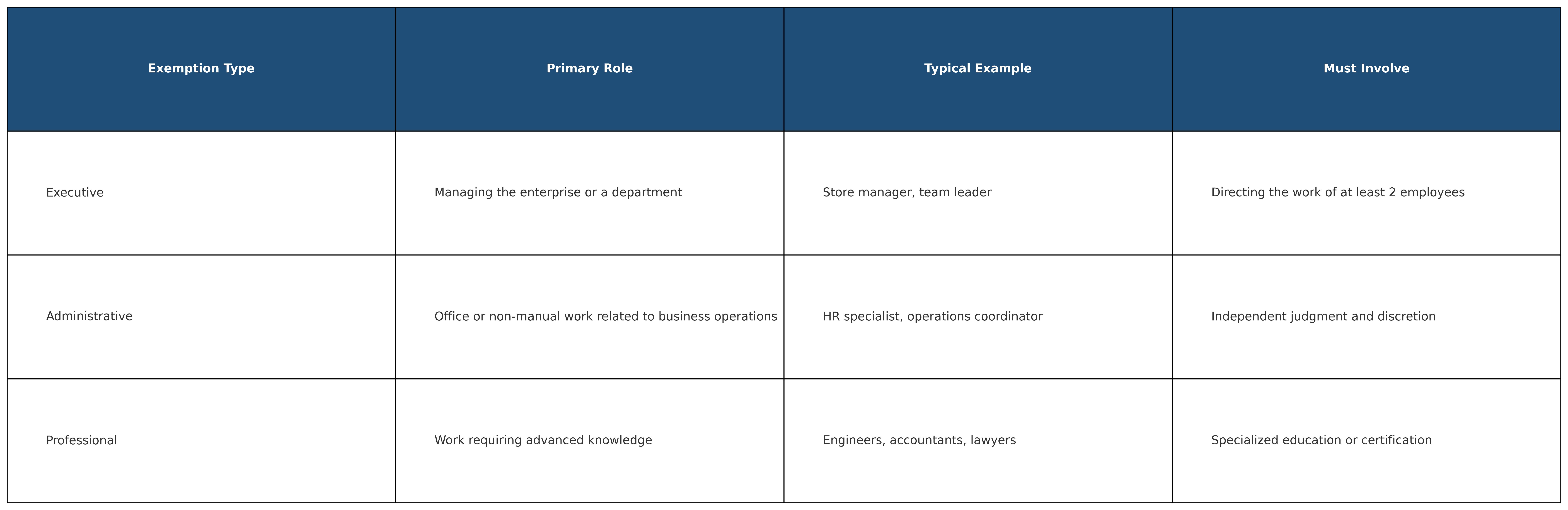
If your job doesn’t clearly fit one of these categories, or if you spend most of your time doing routine tasks rather than managing or advising others, you may not meet the exemption test.
3. The Salary Basis Test
Finally, exempt employees must be paid a fixed salary, which means that it doesn’t fluctuate based on hours worked or performance. If your pay is docked when you leave early, miss a day, or make an error, your employer may have violated the salary basis rule.
For many employees, this test reveals the truth. You might have the title of “manager,” but if your pay depends on the hours you clock, you’re probably non-exempt and eligible for overtime pay.
Why Overtime Eligibility Matters for Salaried Employees
Most salaried employees assume that being “on salary” means overtime doesn’t apply to them. But that’s not always the case and, sometimes, employers rely on that misunderstanding.
In fact, wage theft from unpaid overtime costs U.S. workers billions each year. Employers misclassify workers to avoid paying overtime, hoping employees won’t question their eligibility.
The result? Long hours, flat paychecks, and growing frustration.
“We see it all the time: employees beingtold they’re exempt when they clearly aren’t. Once they learn the rules, they realize they’ve been losing thousands of dollars. The law is there to protect them, they just need someone to enforce it.” – Alan Crone, founder of The Crone Law Firm.
If you’ve ever wondered why your 60-hour weeks never seem to reflect in your paycheck, it’s worth reviewing your classification. A legal evaluation can reveal whether you’re owed back pay (sometimes going back years).
Fair Pay and Workplace Balance
Overtime laws exist to ensure fairness, that when you give more of your time, you’re compensated for it. For too long, salaried workers have been left out of that equation, quietly logging 50- and 60-hour weeks without extra pay.
The latest overtime eligibility rules are a step toward correcting that imbalance. But laws alone don’t enforce themselves – employees have to know their rights and be willing to act when those rights are ignored.
If you believe you’ve been denied overtime or paid unfairly, now is the time to find out where you stand. The Crone Law Firm is here to help you understand your eligibility, explore your legal options, and fight for the pay you deserve.
How the 2025 Overtime Rules Impact Workers
Recent updates to federal overtime law have expanded coverage for millions of U.S. employees. These changes are part of the Department of Labor’s effort to modernize the FLSA and address inflation since the last major adjustment in 1975.
Here’s what that means in practice:
- Higher Salary Threshold:
Workers earning under the new $47,476 annual threshold are now automatically eligible for overtime pay, regardless of job title. - Bonuses Count Toward Eligibility (Up to 10%):
Employers can include nondiscretionary bonuses or incentive payments when calculating your total salary level, but only up to 10%. - Automatic Updates Every Three Years:
To keep up with cost-of-living changes, the threshold will automatically adjust every three years, meaning more workers will become eligible over time. - Broader Coverage Across Industries:
Sectors like retail, hospitality, nonprofits, and healthcare will see the biggest effects, as many managers and administrative workers in these fields earn below the new cutoff.
Real-World Scenarios
Let’s look at how this plays out:
- Retail Store Manager:
Sarah manages a clothing store, earns $44,000 per year, and works 50-hour weeks. Under the new rule, she’s eligible for overtime pay even though she’s salaried. - Marketing Coordinator:
Mark earns $52,000 per year but performs mostly routine tasks under supervision. Because his role lacks independent judgment, he’s non-exempt and still eligible for overtime. - Engineer:
Rachel earns $80,000 per year and uses advanced technical knowledge daily. She likely qualifies as exempt under the professional category.
These examples show how job duties often matter as much as income. That’s why reviewing your classification with an attorney is essential, especially when employers rely on outdated or incorrect assumptions.

Common Misconceptions About Overtime Eligibility
Despite clear laws, myths about overtime persist. Let’s address some of the most common ones.
Myth 1: “Salaried workers can’t get overtime.”
Salary doesn’t determine exemption – job duties and pay level do. Many salaried employees still qualify.
Myth 2: “My employer gave me a manager title, so I’m exempt.”
Titles don’t matter. The Department of Labor looks at what you actually do, not what your business card says.
Myth 3: “I agreed to work long hours, so I can’t complain.”
Fortunately, you can’t waive your FLSA rights. Even if you agreed to certain hours, the law requires employers to pay properly for overtime.
Myth 4: “I’m afraid I’ll lose my job if I ask about overtime.”
It’s illegal for an employer to retaliate against you for asserting your wage rights. If that happens, you may have a separate retaliation claim under the FLSA.
What to Do If You Think You’re Owed Overtime Pay
If you suspect you’ve been misclassified or underpaid, you don’t have to figure it out alone. Here’s what to do next:
1. Review Your Job Description and Pay Records
Start by comparing your duties to the official exemption categories. Keep a copy of your job description, pay stubs, and any emails or documents showing hours worked beyond 40 per week.
2. Track Your Hours
Even if your employer doesn’t require timecards, maintain your own record of hours worked. Courts accept credible employee testimony in wage cases.
3. Speak to a Wage and Hour Attorney
An attorney can review your situation confidentially and determine if your employer violated federal overtime laws. In many cases, you can recover double damages (called liquidated damages) plus attorney’s fees.
4. Don’t Wait Too Long
The FLSA has a two-year statute of limitations (three years for willful violations). Acting quickly preserves your right to recover unpaid wages.
You’ve worked hard for your paycheck. Let’s make sure you’re paid fairly for it.
How The Crone Law Firm Can Help
Our team has decades of experience handling wage and hour disputes under the FLSA and state labor laws. We help employees nationwide recover unpaid overtime and hold employers accountable through negotiation or litigation when necessary.
When you work with us, we:
- Analyze your job classification to see if you were properly categorized.
- Calculate your unpaid overtime using pay records and realistic work estimates.
- Negotiate or litigate to recover owed wages, interest, and penalties.
- Protect you from retaliation, ensuring your rights remain secure throughout the process.

Overtime Eligibility Questions Employees Often Ask
Am I eligible for overtime if I earn a salary?
Yes, if you earn less than the federal threshold or your job duties don’t qualify for exemption.
Can bonuses count toward the salary threshold?
Yes, but only up to 10%, and they must be non-discretionary, meaning tied to measurable performance goals.
What if my employer changes my title to avoid paying overtime?
Title changes alone don’t affect eligibility. Courts look at your actual job duties, not labels.
How far back can I claim unpaid overtime?
Generally up to two years, or three years if the employer knowingly violated the law.
Do I need a lawyer to recover unpaid overtime?
While you can file a claim through the DOL, working with an employment attorney often increases your chances of full recovery and protects you from employer retaliation.
Take the First Step Toward Fair Pay
You’ve already done the hard part: putting in the hours. Now it’s about making sure those hours count.
Overtime eligibility can be confusing, but you don’t have to untangle it alone. A quick consultation with an employment attorney can help you see whether your job classification and pay meet federal standards – and whether you might be owed back pay.
The Crone Law Firm has helped employees nationwide recover unpaid wages and protect their rights under the FLSA. If you’re unsure where you stand, contact us today for a confidential review.
Your time is valuable. Make sure your paycheck reflects it.
About the Author
Alan Crone is the founder of the Crone Law Firm. With decades of experience in employment law, his mission is to help clients navigate complex legal issues while safeguarding their rights and businesses. Connect with him on LinkedIn to learn more about his expertise and leadership in the field.