

You’ve just been let go from your job. The shock hasn’t even worn off yet when a trail of thoughts creeps in: what about the overtime hours you worked last month? Or the unused vacation pay you never received?
This scenario is more common than people realize. After all, termination isn’t just about losing a paycheck, but about unfinished business with an employer who may not have played by the rules. Even after termination, your paycheck should reflect every hour you earned. If it doesn’t, you still have rights and options to set things right.
At The Crone Law Firm, we’ve seen how wage and hour disputes often come to light after a dismissal. We guide clients through the confusion, build strong claims, and fight for fair treatment. If you’re questioning whether your employer owes you money after letting you go, keep reading – you may have more options than you think.
Understanding FLSA Violations After Termination
The Fair Labor Standards Act (FLSA) is the federal law that establishes minimum wage, overtime pay, recordkeeping, and youth employment standards. While most people think of FLSA as something that applies while they are actively working, its protections don’t end the moment you’re fired.
Employers remain responsible for paying every dollar you’ve earned, whether you’re still on the payroll or not. And if your final paycheck leaves out overtime, miscalculates your hours, or deducts money improperly – that’s a violation.
Why This Matters After Firing
When you’re no longer employed, your leverage can feel limited. Many clients come to us assuming it’s too late to do anything about unpaid wages. That good news is that legally, that’s not the case- the law still protects your right to fair pay, even after termination.
Understanding that rights continue is just the start. Let’s look at the most common wage and hour problems that surface after firing.
Common Wage and Hour Rights Issues After Being Fired
Many clients discover FLSA violations only when reviewing their final paycheck. Here are the situations we see most often:
Unpaid Overtime After Being Fired
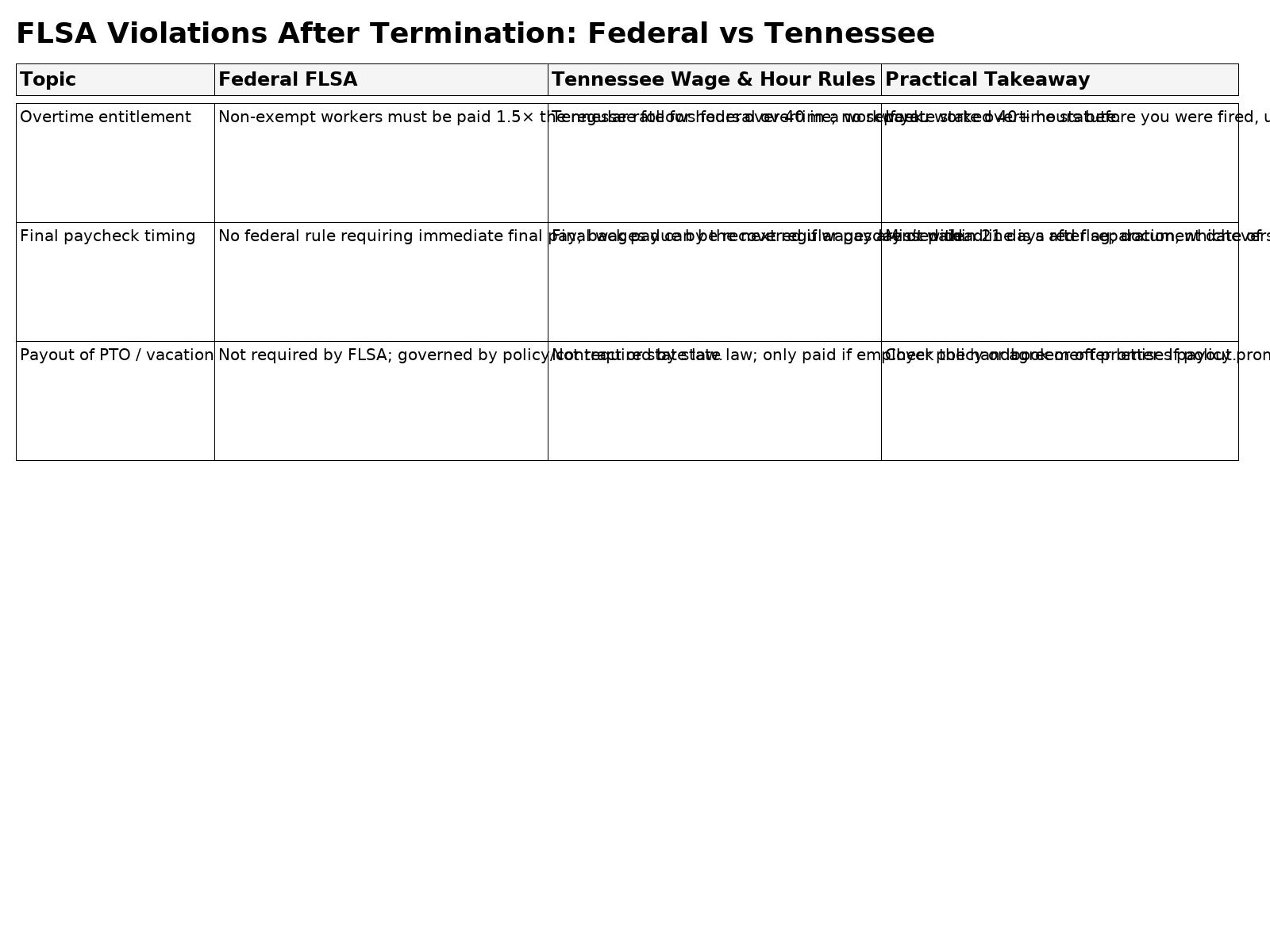
If you worked more than 40 hours in a week and didn’t receive overtime pay, your employer still owes you that money. This includes weeks leading up to your termination. In Tennessee, these claims are particularly important for industries like healthcare, logistics, and retail, where overtime is common.
Final Paycheck Delays or Deductions
Some employers delay the final paycheck or make unauthorized deductions. For example, charging you for “training costs” or unreturned equipment without proper consent. Wage and hour law generally prohibits these practices.
Misclassification Problems
If you were treated as an “independent contractor” but worked like an employee, you may have been denied overtime or minimum wage protections under FLSA. Misclassification often surfaces after firing because workers finally have the space to question how they were paid.
Unused Vacation or PTO Questions
While the FLSA doesn’t require vacation payout, Tennessee law also does not mandate it. However, if your employer’s handbook, policy, or contract promised unused PTO payment, that promise may be enforceable.
Spotting the issue is step one, but the real challenge is proving that a violation occurred.

How to Identify Signs of Wage Theft After Termination
Most FLSA claims after termination succeed or fail on the strength of the evidence. Your word alone may not carry the day – but the documents, messages, and witnesses you gather can. And you don’t have to be employed anymore to build a solid record. Here’s a practical process:
1. Review Past Pay Stubs and Hours
Pull out every pay stub you can find, especially from the weeks leading up to your termination. Compare them with your own notes, calendars, or even text messages about your shifts. Ask yourself:
- Did the paycheck cover every hour you worked?
- Were overtime hours paid at the correct 1.5× rate?
- Do the numbers suddenly drop right before you were fired?
Even small discrepancies add up, and courts often see patterns where employers repeatedly underpay workers.
2. Compare Promised Wages vs. Received
Your offer letter, employment agreement, or company handbook is more than just paperwork – it’s evidence of what your employer agreed to pay. If your final paycheck skips a bonus you earned or reduces your hourly rate, that’s a sign of a potential FLSA violation. Many employees discover this only after separation, when they finally take a close look at the promises versus reality.
3. Document Communications with Employer
Don’t underestimate the value of a simple email or text. A manager asking you to “stay late and close” or acknowledging “you’ll get overtime for this” can prove hours that aren’t on your timesheet. Save these messages, back them up, and organize them by date. The clearer your digital trail, the harder it is for an employer to deny what happened.
4. Talk to Former Co-Workers
Wage theft often isn’t an isolated event. If your paycheck looks suspicious, chances are your colleagues experienced the same thing. Reach out privately to trusted co-workers and ask whether their hours matched their pay. If multiple people share similar stories, your case becomes stronger and may even open the door to a group claim.
Post-Termination Audit Checklist
Once you’ve identified possible violations, the next issue is running against the clock – waiting too long can close the door on your claim.
Taking Action on FLSA Claims After a Firing
Knowing you’re owed money is one thing – getting it is another. Here’s how to move forward with your claim.
File a Complaint with the Department of Labor
The U.S. Department of Labor enforces FLSA claims and can launch an investigation into your former employer. While the process can take time and outcomes may vary, it’s an important step that can lead to recovering lost wages and holding employers accountable.
Check State Law Protections
Tennessee wage and hour law adds another layer of protection. Employers must follow both federal and state requirements, which means you may have multiple avenues for recovery.
Act Quickly
You generally have two years to file an FLSA claim (three years for willful violations). That may sound like a long time, but evidence fades fast. Pay stubs disappear, emails get deleted, and co-workers move on. Acting early keeps your case strong.
Consider Legal Counsel
While you can file a complaint on your own, many clients find that having an attorney changes the balance. Employers often take legal claims more seriously when they see a lawyer involved. An attorney also knows how to calculate unpaid wages accurately and uncover violations you may have missed.
And if you’re wondering whether pursuing a claim is worth the effort, it’s time to consider the long-term benefits.

How The Crone Law Firm Helps Protect Your Rights
We focus on employment law, which means we help employees hold employers accountable under the FLSA and Tennessee wage and hour law. Here’s how we do it:
Case Strategy and Evidence Review
We start by reviewing your pay records, job duties, and termination details. This includes examining whether your firing could be considered wrongful termination. From there, we map out whether your claim should be pursued through negotiation, the Department of Labor, or litigation.
Negotiation vs. Litigation Approach
In many cases, employers prefer to resolve disputes privately. We negotiate settlements when possible but don’t hesitate to take claims to court when needed.
Results That Matter
The goal isn’t just financial recovery – it’s accountability. Our clients leave knowing their employers couldn’t sweep unpaid overtime under the rug, and that their rights were fully enforced.
“Too often, employees assume that termination means the end of their rights. In reality, the law is clear: employers remain responsible for paying what’s owed, even after someone has been fired.” – Alan Crone, Founder of The Crone Law Firm.
If you’re unsure whether your situation qualifies, the best step is to ask. A short conversation with a lawyer can provide clarity you may not find anywhere else.
Common Questions About FLSA Violations After Termination
Can I claim unpaid overtime after being fired?
Yes. If your employer failed to pay overtime you earned before termination, you can still pursue an FLSA claim.
How long do I have to file an FLSA claim after termination?
Generally, you have two years (three years if the violation was willful). However, acting quickly helps preserve evidence.
Does Tennessee law offer extra protections beyond the FLSA?
Yes. Tennessee wage and hour law may provide additional remedies, especially in cases involving unpaid overtime TN disputes.
Do I need a lawyer to file a wage claim?
While not required, having legal support often strengthens your case. An attorney can uncover violations you may not have noticed and help you recover more.
Protecting Yourself After Termination
Being fired is hard enough. Discovering unpaid wages afterward can feel even more overwhelming. But the law gives you tools to hold employers accountable – and you don’t have to use them alone.
At The Crone Law Firm, we help employees stand up for their wage and hour rights after firing. If you believe you’ve faced FLSA violations after termination, we’re here to review your case, explain your options, and fight for what you’ve earned.
Contact our Memphis office today to schedule a confidential consultation.
About the Author
Alan Crone is the founder of the Crone Law Firm. With decades of experience in employment law, his mission is to help clients navigate complex legal issues while safeguarding their rights and businesses. Connect with him on LinkedIn to learn more about his expertise and leadership in the field.